End of moratorium on standardised invoice: all businesses required to comply from April 1
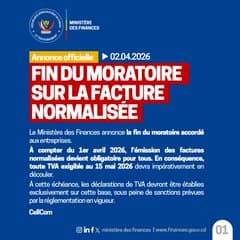
The Minister of Finance confirmed the end of the moratorium on the standardised invoice reform. Starting April 1, 2026, all businesses must exclusively issue standardised invoices, strengthening tax transparency and the mobilisation of public revenues.
April 2, 2026 — The Minister of Finance, H.E. Doudou Fwamba Likunde Li-Botayi, confirmed the end of the moratorium on the standardised invoice following the working session he chaired on March 31, 2026, with the Federation of Enterprises of the Congo (FEC), in the presence of the Director General of the DGI and experts from the Cabinet.
Initially coming into effect on December 1, 2025, the standardised invoice reform had benefited from a moratorium requested by the FEC to allow businesses to better adapt to the new requirements.
Joint FEC-Finance Commission outcomes
This decision follows the work of the Joint FEC-Finance Commission, which has helped resolve the bulk of the technical constraints related to MCFs and e-DEF platforms. The number of taxpayers enrolled has risen from 4,925 to 6,968 as of March 30, 2026, with an account activation rate reaching 100%.
Investor relevance: tax system modernisation
A true lever for modernising the tax system, the standardised invoice reform strengthens transparency, the traceability of transactions, and the mobilisation of public revenues. It also helps to clean up the business climate by ensuring fair rules for all economic operators.
- Full mandatory compliance from April 1, 2026 for all businesses
- 6,968 taxpayers enrolled, 100% account activation rate
- Technical constraints on MCFs and e-DEF platforms largely resolved
- Support mechanisms: ticketing system, technical FAQ, and Call Center
- VAT declarations based exclusively on standardised invoices from May 15, 2026